

Introduction: The Data Revolution Beyond Traditional Indicators
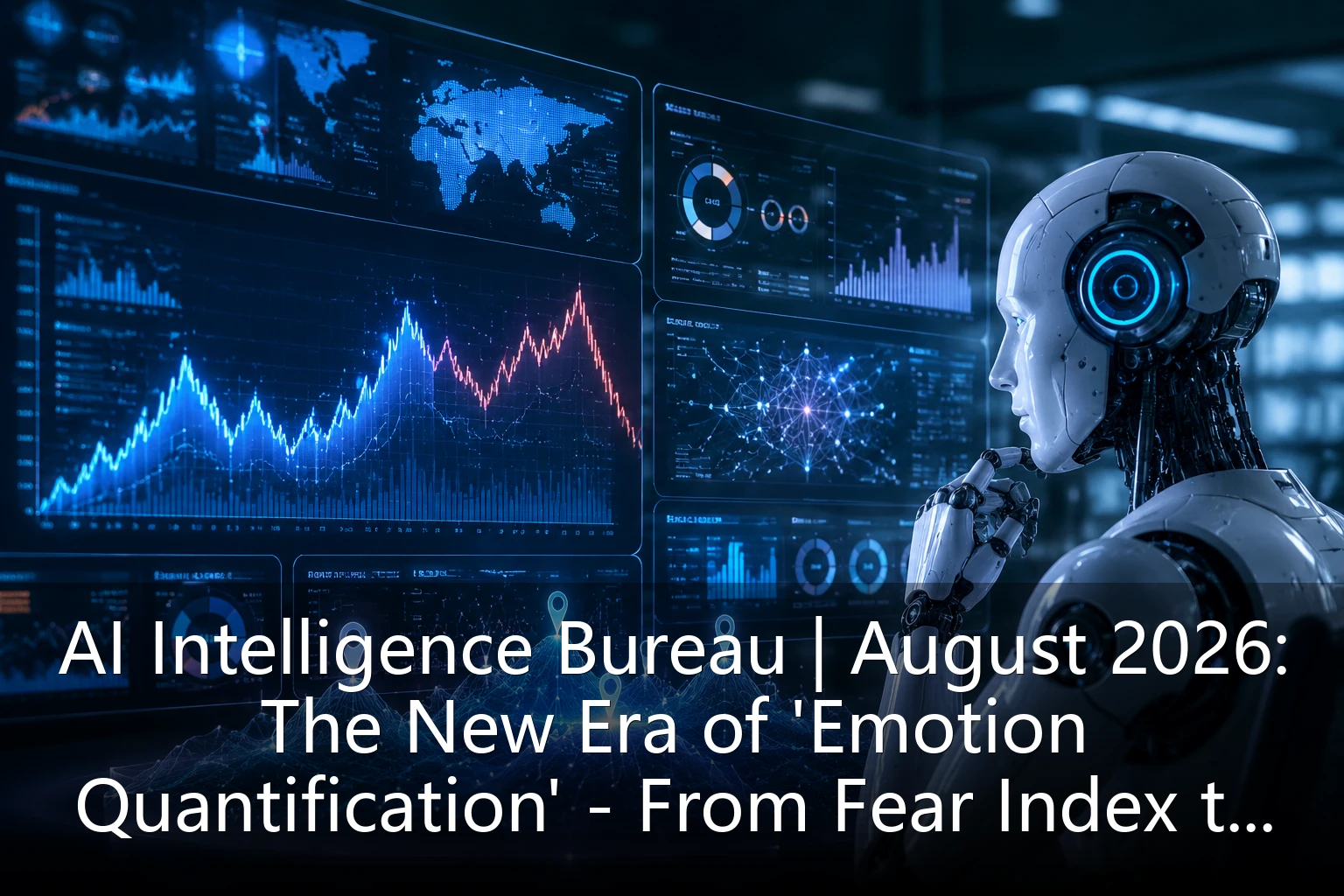
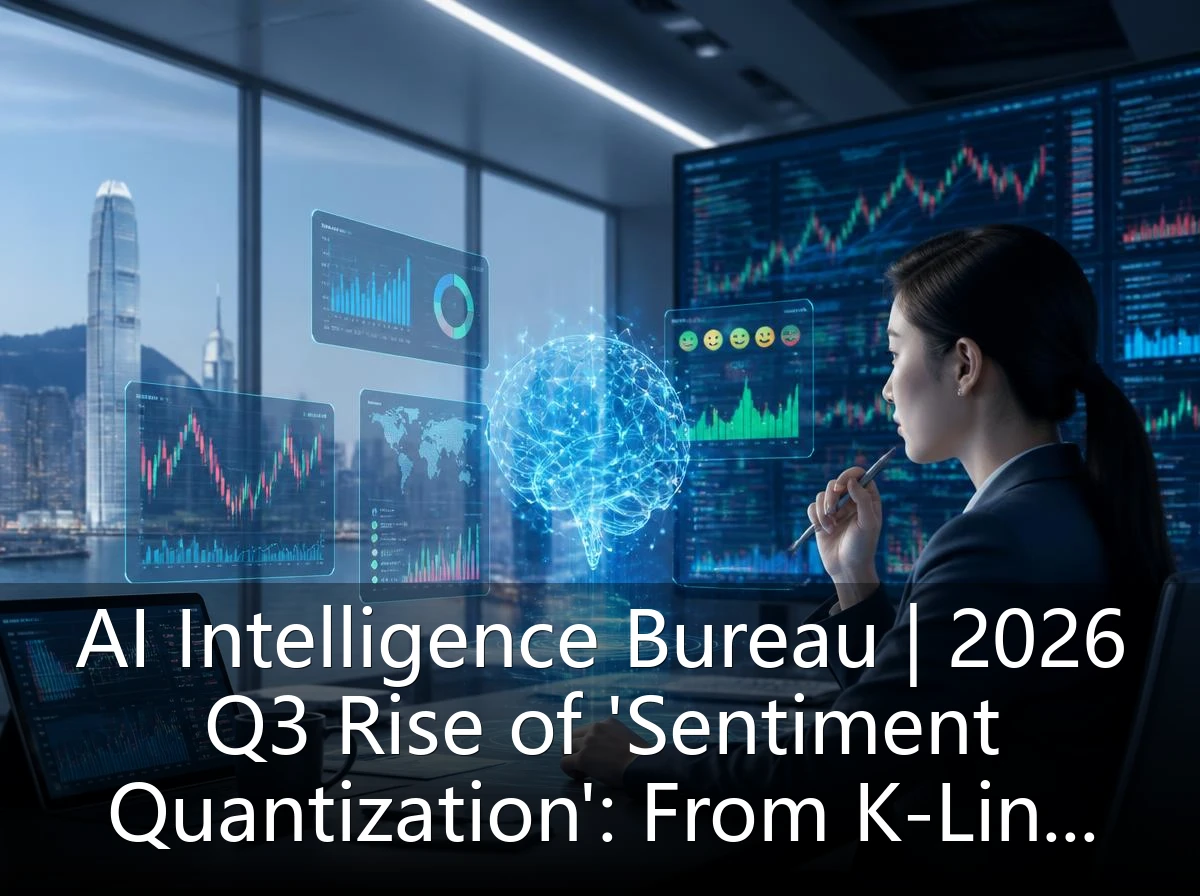
In 2026, when we examine the trading screens of the Hong Kong stock market, traditional K-line charts, MACD indicators, and RSI strength indicators remain basic tools for investors, but they are no longer the sole basis for decision-making. With the rapid development of AI technology, especially the deep application of Large Language Models (LLMs) in the financial vertical, a brand-new analytical paradigm—"Sentiment Quantization"—is quietly rising.
In the past, market sentiment was viewed as an ethereal, elusive "psychological game," often relying on the subjective intuition of senior traders. However, in Q3 2026, this vague intuition is being replaced by precise data models. AI is no longer just a calculator processing financial report data; it is evolving into a psychologist capable of understanding the market's "emotions." For a market like the Hong Kong stock market, which is deeply influenced by liquidity and extremely sensitive to global macro sentiment, the reconstruction of AI sentiment analysis is particularly significant. It marks the transition of investment research from a two-dimensional analysis of "Fundamentals + Technicals" to a three-dimensional era of "Fundamentals + Technicals + Sentiment."
Technological Leap in Sentiment Quantization: From Keywords to Semantic Understanding
Early market sentiment analysis relied primarily on simple keyword counting. For example, algorithms would count how many times words like "rise," "plunge," or "bullish" appeared in news headlines to build a simple sentiment index. However, this method often fails to recognize the complexity of context. A sentence like "The market ended its rise due to concerns about inflation rebound," although containing the word "rise," actually conveys negative sentiment.
Entering 2026, with breakthroughs in Natural Language Processing (NLP) technology, AI sentiment analysis has experienced a qualitative leap. Deep learning models based on Transformer architecture can understand the contextual connections of long texts, capturing sarcasm, metaphors, and complex logical progressions. Current AI systems can scan tens of thousands of information sources in real-time, including HKEX announcements, mainstream financial media, social media discussions, and even speech-to-text records of analyst conferences.
Multimodal Data Fusion: Understanding the Market's "Subtext"
Even more remarkable is that sentiment quantization in 2026 has entered the stage of multimodal fusion. AI is no longer limited to text analysis; it has begun attempting to interpret image and video data. For example, by analyzing micro-expressions at the Federal Reserve Chair's press conference, or interpreting the accumulation of containers at ports via satellite imagery to verify trade sentiment. In the Hong Kong stock market, this technology is widely applied to the monitoring of tech giants and consumer stocks. AI can predict the quarterly performance of a consumer stock in advance by analyzing real-time bullet screen comments in e-commerce live streams, thereby capturing Alpha returns before financial reports are released.
This leap from "text analysis" to "semantic understanding" and then to "multimodal perception" has enabled AI to reach an unprecedented height in precision in capturing market sentiment. It is no longer a reaction mechanism lagging behind the market, but capable of predicting capital flow trends in advance through subtle changes in sentiment.
The "Sentiment Alpha" Effect in the 2026 Hong Kong Stock Market
In the 2026 Hong Kong stock market, we observe a distinct phenomenon: the effectiveness of sentiment factors has significantly improved. Due to the high degree of institutionalization in the Hong Kong market and its close linkage with global markets, traditional valuation models (such as PE and PB) often fail in the face of sudden black swan events. AI sentiment indicators, however, have demonstrated amazing predictive power at such times.
Cognitive Game Between Institutions and Retail Investors
The current Hong Kong stock market is in a delicate balance period. On one hand, the continuous inflow of Southbound funds provides bottom support for the market; on the other hand, the volatility of the global macroeconomy still exists. In this environment, the frequency of market sentiment fluctuations accelerates, and amplitude increases. AI models have found that the sentiment extremes of retail investors often run counter to the short-term tops and bottoms of the market.
For example, when the discussion of a hot tech stock on social media reaches saturation, and the sentiment indicator detected by AI shows that "blind optimism" accounts for over 90%, it often heralds the arrival of a short-term pullback. Conversely, when the market is filled with despair and the semantic intensity of negative sentiment reaches historical extremes, the AI system will issue an "oversold rebound" signal. This quantitative strategy based on behavioral finance is becoming a secret weapon for many hedge funds to obtain excess returns (Alpha) in Hong Kong stocks.
In addition, AI sentiment analysis has also changed the logic of short selling in Hong Kong stocks. In the past, short selling was often based on evidence of financial fraud or fundamental deterioration. Now, by monitoring changes in the tone, word ambiguity, and nervous body language of company executives during financial meetings via AI, quantitative funds can discover potential risk signals earlier, thereby establishing short positions before the news is officially released.
Risks and Reflections: Algorithmic Bias and "Sentiment Black Holes"
Although AI sentiment analysis has brought powerful tools to investment decision-making, we must also soberly recognize its potential risks. The market in 2026 has already experienced several flash crashes caused by algorithmic resonance. When mainstream AI models, based on similar data sources and algorithmic logic, make the same "panic" interpretation of a piece of negative news, the instantaneous surge of machine sell orders is enough to breach any liquidity defense line.
This homogenization of algorithms may lead to the emergence of "sentiment black holes" in the market. In extreme market conditions, AI may not only fail to provide risk aversion guidance but may also become an amplifier of volatility. Furthermore, bias in data sources is also a major hidden danger. If AI relies too heavily on social media data, it may be misled by paid trolls or maliciously manipulated public opinion, thereby making erroneous judgments. For example, some short-selling institutions have attempted to use generative AI to create a large amount of fake negative comments, trying to interfere with the judgment of market sentiment models, which has triggered high attention from regulators regarding "AI-generated misinformation."
Conclusion: The Symbiosis of Rationality and Sensibility
Looking to the future, the application of AI sentiment analysis in the Hong Kong stock market will only deepen. We are at a historical node transitioning from the "Information Age" to the "Cognitive Age." AI has endowed us with the ability to quantify human perceptual cognition, but this does not mean that human investors will be completely replaced.
On the contrary, the most successful investment strategies will be the product of "human-machine collaboration." AI is responsible for capturing fleeting sentiment signals in massive data and providing objective probability distributions; while human investors are responsible for combining macro backgrounds, geopolitical logic, and profound insights into human nature to perform a secondary verification of AI signals. In Q3 2026 and the days to come, investors who can proficiently use AI sentiment tools while maintaining independent thinking abilities will sail further and more steadily in the ocean of Hong Kong stocks, full of opportunities and challenges.