

Introduction: The "iPhone Moment" in Investment Research Has Arrived
By mid-August 2026, looking back at the development of fintech over the past two years, it is evident that AI application in investment research has achieved a qualitative leap. If 2023 was the breakout year for generative AI and 2024 was the exploration phase for application, then 2026 is undoubtedly the "deep water zone" where intelligent investment research tools fully penetrate the trading decision chain.
In the long-term tracking by "Huagang Intelligence", we found that current Intelligent Investment Research Tools are no longer limited to simple "information retrieval" or "research report summary generation". They are evolving into "cognitive agents" with autonomous planning, multimodal understanding, and deep reasoning capabilities. This paradigm shift is profoundly changing information processing efficiency and investment decision logic in the Hong Kong, A-share, and global capital markets.
Technical Core: The Leap from "Generation" to "Reasoning"
Early AI investment research tools were mostly based on RAG (Retrieval-Augmented Generation) technology, answering user questions by retrieving massive databases. However, when facing complex macro-logical deductions or correlation analysis of sudden black swan events, this mode often appears inadequate. The key competitiveness of the latest generation of intelligent investment research systems in 2026 has shifted to "reasoning capability".
Current industry benchmark products generally integrate reinforcement learning and Chain-of-Thought technology. This means that when investors ask about "the transmission path of the Fed's expectation of slowing rate hikes to the valuation repair of Hong Kong tech stocks", the AI no longer mechanically splices views from several research reports. Instead, it can construct a logical framework like a senior analyst: from improved macro liquidity, to reduced exchange rate pressure, to increased foreign risk appetite, and finally to upward revisions in corporate earnings expectations.
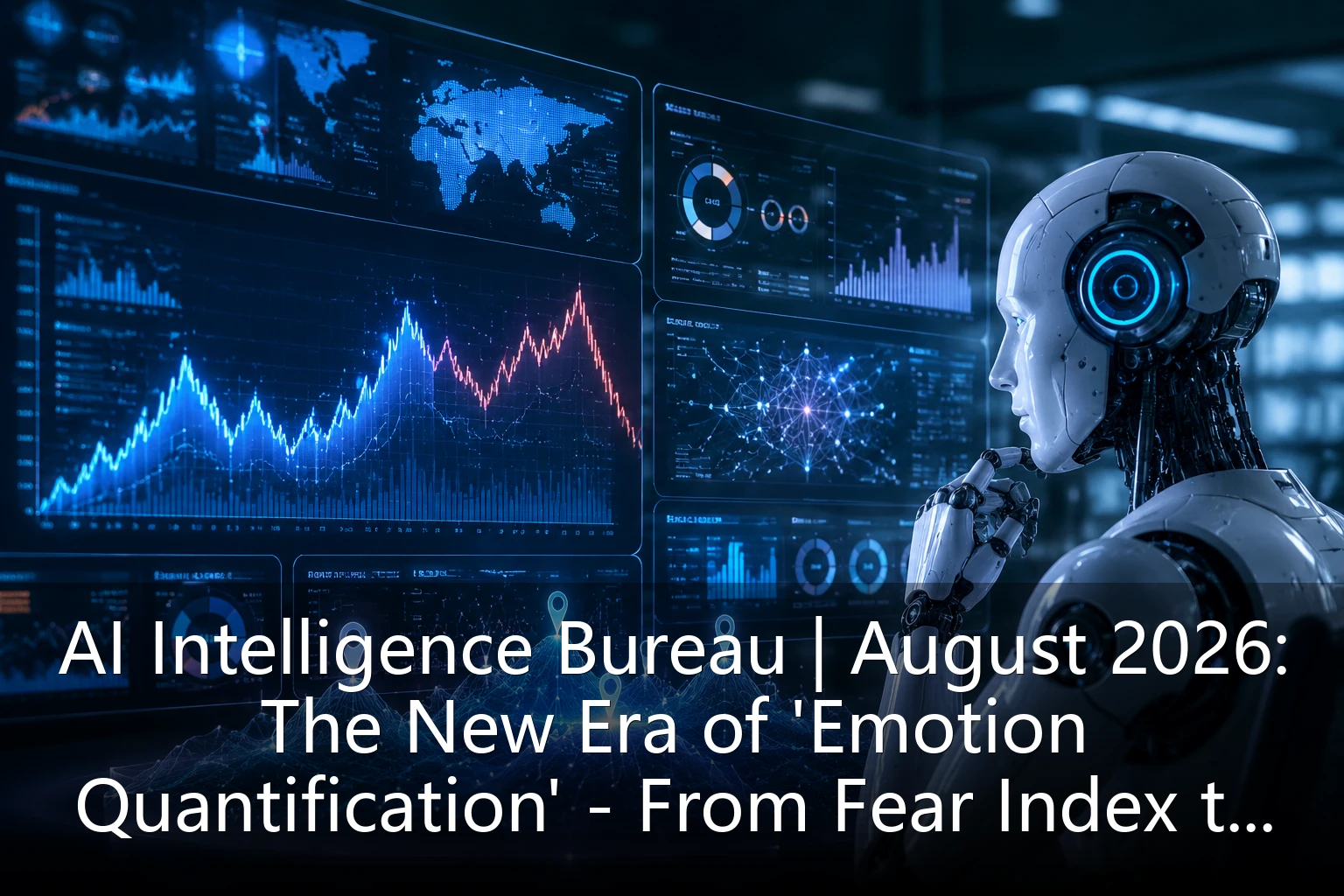
Furthermore, the maturity of multimodal fusion technology is also the biggest highlight of this year. Intelligent investment research tools can now seamlessly process text, financial report PDF data tables, K-line chart patterns, and even audio of the Fed Chair's speeches. For example, when analyzing a semiconductor company, AI can simultaneously read revenue data from its quarterly report, supply and demand charts of the upstream and downstream supply chain, and combine audio sentiment analysis from industry expert meetings to output comprehensive investment advice containing quantitative charts and qualitative interpretation.
Practical Perspective: The New "AI-Enhanced" Ecosystem of the Hong Kong Stock Market
Focusing on the Hong Kong stock market, due to its unique offshore market attributes, complex capital structure, and bilingual Chinese-English information environment, it has always been a "hard nut to crack" for investment research. However, since 2026, the penetration rate of intelligent investment research tools in the Hong Kong market has increased significantly, reconstructing the ecosystem of this market.
1. Real-time Stitching of Cross-market Information
Hong Kong listed companies often involve comparison with A-share peers and linkage with US ADRs. The new generation of AI tools can capture policy-positive news from A-share peers in real-time and combine it with pre-market trends of US tech giants to predict sentiment after the Hong Kong market opens. For example, when domestic digital economy policies are introduced, AI can instantly screen for the targets in the Hong Kong SaaS sector that benefit the most, providing an estimate of the probability of an increase based on historical backtesting.
2. The "Super Grader" of Earnings Season
The just-passed Q2 earnings season was the stage where AI investment research tools shone. In the past, analysts needed to read hundreds of PDF reports overnight, but now, tools based on document parsing large models can complete the initial screening of all Hong Kong main board reports within minutes. They not only extract key financial indicators but also identify changes in tone in the "Letter to Shareholders" by management—this micro-level sentiment analysis can often warn of performance inflection points earlier than financial data.
3. Deep Integration of Quantitative and Fundamental Analysis
In the highly institutionalized Hong Kong market, pure quantitative or pure fundamental strategies are prone to bottlenecks. Intelligent investment research tools are breaking down the barriers between the two. On one hand, AI uses NLP technology to convert qualitative views from sell-side research reports into structured factor data; on the other hand, it uses machine learning to mine the correlation between unstructured data (such as social media sentiment, supply chain satellite imagery data) and stock price fluctuations. This "fundamental quantification" strategy demonstrated excellent drawdown control capabilities during the volatile market of the first half of 2026.
Industry Interpretation: The Game Between Cognitive Equality and Strategy Homogenization
With the popularization of intelligent investment research tools, a view has emerged in the market: Has AI leveled the information gap between retail investors and institutions, achieving "cognitive equality"?
From the perspective of tool access, this is indeed the case. Today, individual investors can obtain sentiment monitoring and graph analysis capabilities previously available only to top hedge funds by subscribing to SaaS services. However, deep industry observation tells us that the real barrier is shifting from "information acquisition" to "questioning ability" and "data screening".
- Questioning is Insight: Facing the same AI tool, senior fund managers can ask questions that hit the core business logic, while novices may only stay at the level of asking "will it rise tomorrow?". The quality of AI output highly depends on the user's financial cognitive framework.
- Privatization of Data Sources: Although public model capabilities are converging, leading institutions are building exclusive models fine-tuned based on their own private trading data. These models contain the institution's unique risk control logic and trading habits, serving as a "moat" that general AI tools cannot replicate.
Another risk that cannot be ignored is "strategy homogenization". When the vast majority of people in the market use similar AI algorithms for trend tracking and stop-loss operations, the market may experience extreme crowded trades. Once AI models issue convergent sell signals, it may exacerbate the risk of market flash crashes. This is also why regulatory scrutiny on the compliance of algorithmic trading is becoming increasingly strict in 2026.
Future Outlook: A New Paradigm of Human-Machine Symbiosis in Investment Research
Looking towards the second half of 2026 and beyond, the development of intelligent investment research tools will present the following trends:
First, Agentification will become standard. AI will no longer be a passive Q&A machine but an "assistant" capable of actively executing tasks. For example, you can authorize AI to monitor a specific industry; once a specific catalyst event (such as a large M&A, technological breakthrough) occurs, it will automatically complete the entire process from data collection and logical deduction to even drafting trading orders.
Secondly, the demand for Explainable AI (XAI) will explode. Financial institutions cannot accept a "black box" model to manage funds. Future AI investment research tools must be able to clearly explain the source and confidence level of their recommendation logic to the investment committee, which will be the focus of competition for technology vendors.
Finally, for investors, embracing AI does not mean abandoning one's own thinking. On the contrary, the arrival of the AI era requires us to become better "architects". We need to know how to command AI, how to verify AI's conclusions, and how to rely on human unique intuition and experience to turn the tide in extreme market conditions where AI fails.
In the summer of 2026, intelligent investment research tools have completed the transformation from "icing on the cake" to "indispensable". For every participant in the Hong Kong and global markets, mastering these tools is not only a means to improve efficiency but also a compulsory course for survival in the increasingly complex financial jungle.